1. Archaeologists determine humans have feasted for thousands of years
(Level B)
考古学家确定人类已有数千年宴饮的历史
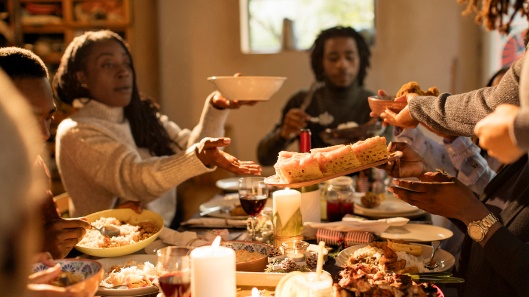
During this 2018 holiday season, millions of families will get together. 音在 2018 年这个假日季,数百万家庭将相聚一堂。They will give each other gifts and celebrate. 音他们会互赠礼物并庆祝。Many will cook and enjoy a holiday feast. 音许多家庭会烹饪并享受节日宴会。
Archaeologists are people who study ancient objects, called artifacts, to learn how people lived in the past. 音考古学家是研究古代物品(称为文物)以了解过去人们生活方式的人。A team of archaeologists found evidence that feasting has long been an important part of human traditions. 音一组考古学家发现了证据,表明宴会长期以来一直是人类传统的重要组成部分。
Leore Grosman, a fellow archaeologist, and I studied a 12,000-year-old archaeologicaldig site called Hilazon Tachtit. 音考古学家莱奥雷·格罗斯曼和我研究了一个有 12000 年历史的考古遗址,名为希拉宗·塔奇特。The site was in Israel, a country in the Middle East. 音该遗址位于中东国家以色列。Over the years, we found proof of important ritual feasts at the site. 音多年来,我们在该遗址发现了重要仪式宴会的证据。We learned how feasts came to be such an important part of modern ritual practice. 音我们了解到宴会是如何成为现代仪式实践中如此重要的一部分的。
First, What Are Rituals? 音首先,什么是仪式?
Rituals are meaningful, often repeated actions. 音仪式是有意义且经常重复的行为。Modern examples include birthdays and weddings. 音现代的例子包括生日和婚礼。Decorating a Christmas tree or lighting Hanukkah candles are also rituals. 音装饰圣诞树或点燃光明节蜡烛也是仪式。
Ritual practice may have begun over 100,000 years ago. 音仪式实践可能始于 10 万多年前。However, archaeologists have had a hard time finding proof. 音然而,考古学家一直难以找到证据。For example, researchers know that early humans buried their dead. 音例如,研究人员知道早期人类埋葬他们的死者。Scholars, though, did not know if burials had any symbolic meaning. 音然而,学者们不知道埋葬是否有任何象征意义。The burial practice could also have been for something more practical, like keeping the site clean. 音埋葬行为也可能是出于更实际的原因,比如保持场地清洁。Later, experts began finding special objects in graves going back 40,000-20,000 years. 音后来,专家们开始在可追溯到 4 万至 2 万年前的坟墓中发现特殊物品。Then, they could prove that burial was a ritual. 音然后,他们能够证明埋葬是一种仪式。
The First Feasts 音最初的宴会
Leore Grosman and I first began digging at Hilazon Tachtit in the late 1990s. 音莱奥雷·格罗斯曼和我在 20 世纪 90 年代末首次开始在希拉宗·塔奇特挖掘。We thought we were studying a small campsite. 音我们原以为我们在研究一个小营地。Over the years, though, we realized the area was not a place where people lived but was actually a site for rituals. 音然而,多年来,我们意识到这个区域不是人们居住的地方,实际上是一个举行仪式的场所。
No houses, fireplaces, or cooking areas were found. 音没有发现房屋、壁炉或烹饪区。Instead, we found the graves of 28 people. 音相反,我们发现了 28 个人的坟墓。
One of these buildings contained the bones of an older woman. 音其中一个坟墓中有一位年长女性的骨头。We decided she was a spiritual leader or healer based on her special treatment at death. 音基于她死后的特殊待遇,我们认为她是一位精神领袖或治疗师。Her grave was beautifully made and decorated. 音她的坟墓建造精美且装饰华丽。A strange group of animal body parts had been buried with her, including the remains of 90 tortoises. 音一组奇怪的动物身体部分与她一同埋葬,包括 90 只乌龟的遗骸。A second site in the cave floor revealed the leftovers of at least three wild cattle. 音洞穴地面的第二个地点发现了至少三头野牛的剩余部分。We believe these were the remains of a funeralfeast. 音我们认为这些是葬礼宴会的遗迹。
Feasting At The Beginning Of Agriculture音农业开始时期的宴会
Archaeologists have found other proof of ritual feasting. 音考古学家发现了其他仪式宴会的证据。Many of these date to the time when humans were first beginning to farm. 音其中许多可以追溯到人类刚开始务农的时候。
One example is Göbekli Tepe in southeastern Turkey, a country in Eastern Europe. 音一个例子是位于东欧国家土耳其东南部的哥贝克力石阵。The site is not as old as Hilazon Tachtit. 音这个遗址不像希拉宗·塔奇特那么古老。Archaeologists in Turkey found large, decorated buildings. 音土耳其的考古学家发现了大型的、装饰精美的建筑。The stone slabs were painted with beautiful animal images from 11,000 to 12,000 years ago. 音11000 至 12000 年前的石板上绘有美丽的动物图像。The structures could be very early public buildings. 音这些建筑可能是非常早期的公共建筑。The archaeologists who studied Göbekli Tepe found large numbers of animal bones. 音研究哥贝克力石阵的考古学家发现了大量的动物骨头。They believe the bones are proof of ritual feasting. 音他们认为这些骨头是仪式宴会的证据。
Twelve thousand years ago, humans were still hunter-gatherers. 音12000 年前,人类仍然是狩猎采集者。They lived entirely on wild foods. 音他们完全依靠野生食物生活。However, these people were just at the beginning of agriculture. 音然而,这些人正处于农业的开端。Growing food on farms would be one of the biggest changes in human history. 音在农场上种植食物将是人类历史上最大的变革之一。
We found farming tools at Hilazon Tachtit and other archaeological sites from the same time. 音我们在希拉宗·塔奇特和同时期的其他考古遗址发现了农具。Ritual feasts then, seem to have started around the same time that people started growing food. 音当时的仪式宴会似乎与人们开始种植食物的时间大致相同。When people moved toward farming, they began to stay in one place. 音当人们转向农业时,他们开始定居在一个地方。Feasting seems to have become important as people stopped moving around and started building lastingcommunities. 音随着人们不再四处迁徙并开始建立持久的社区,宴会似乎变得重要起来。
Rituals That Bind音有凝聚力的仪式
Feasts became important to the new communities. 音宴会对新社区变得重要。Adapting to village life was hard for early humans. 音早期人类适应乡村生活很艰难。Research on modern hunter-gatherer societies shows that people began to argue as they lived closer together. 音对现代狩猎采集社会的研究表明,当人们住得更近时,开始出现争吵。Feasting and ritual, then, appears to be one key solution to the problems of group living. 音因此,宴会和仪式似乎是群体生活问题的一个关键解决方案。
Ritual helps to provide a kind of social glue. 音仪式有助于提供一种社会粘合剂。Traditions bind community members together. 音传统将社区成员凝聚在一起。Sharing food is deeply personal and helps to build trust. 音分享食物是非常私人的行为,有助于建立信任。
As social circles grew, rituals helped people connect with each other. 音随着社交圈子的扩大,仪式帮助人们相互联系。
Role Of Feasts Today 音当今宴会的作用
Feasting plays the same important role today. 音如今宴会仍然发挥着同样重要的作用。The holiday feast builds family traditions. 音节日宴会建立了家庭传统。Sharing food also gives extended families a sense of connection. 音分享食物也给大家庭一种联系感。By giving families a chance to bond, holiday rituals bring friends and families together. 音通过给家庭一个建立联系的机会,节日仪式将朋友和家人聚集在一起。